
Te Awa Kairangi and the other streams of the valley have long been essential to the communities that lived there. Winding through heavily forested terrain where few overland routes existed, the river served as a vital artery for travel by waka, communication, and trade. Along its banks kāinga (villages) and pā (fortified settlements) flourished, linked together by the river.
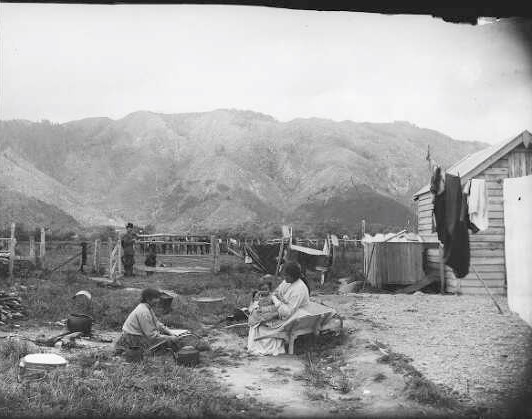 Williams, William, 1858-1949. Women and baby at Waiwhetu Pa. Williams, Edgar Richard, 1891-1983: Photographs and papers. Ref: 1/1-025979-G. Alexander Turnbull Library, Wellington, New Zealand. natlib.govt.nz/records/22896631
The estuary of Te Awa Kairangi was a thriving centre of iwi activity, drawn by the abundance of natural resources. The coastal environment supported fishing, gathering, and settlement, making it a place of great significance for Mana Whenua.
Today known as Pito One East on one side of the river and Seaview on the other, the area remains deeply interwoven with the histories, traditions, and enduring presence of Mana Whenua.
Te Awa Kairangi was a treasured mahinga kai – an essential food-gathering place. Its waters were full of pātiki (flounder), kanae (mullet), piharau (lamprey), kōkopu (giant and banded bully fish), īnanga (whitebait), ngaore (smelt), and tuna (eel). Te Āti Awa kaumātua Mohi Karena Te One recalled the abundance of eels and watercress in the Waiwhetū Stream and describes the mouth of the river so full of kahawai that “you could have walked across the river on their backs.”
Three Te Āti Awa settlements were at the estuary. Hīkoikoi Pā on the western side andWaiwhetū Pā on the east, with Paetutu Kainga on the western bank further upstream. These sites were central to the sustained occupation of the Taranaki Whānau tribal collective in Te Whanganui a Tara and holds special significance to the Te Matehou and Ngāti Hamua hapū of Te Āti Awa.
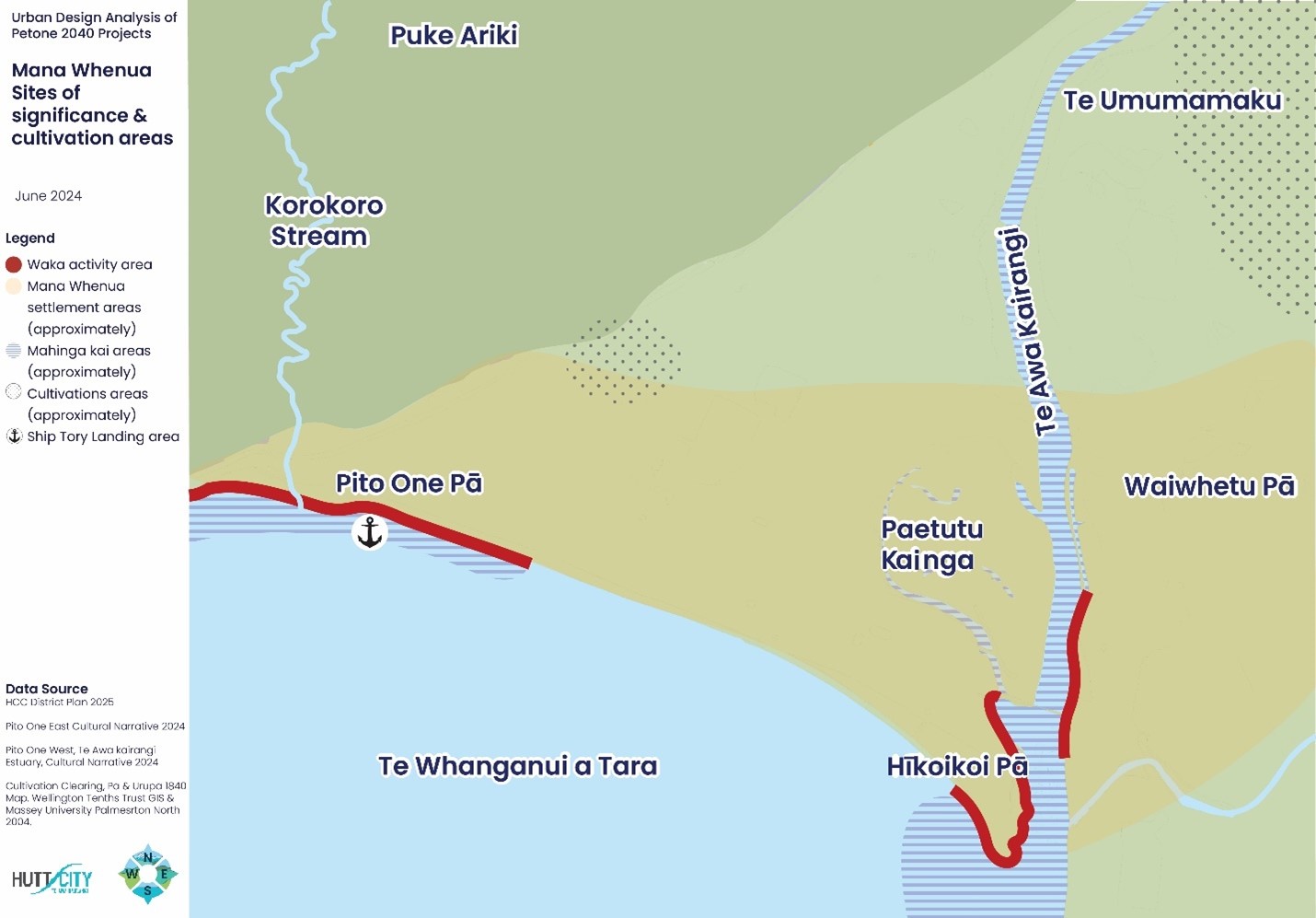
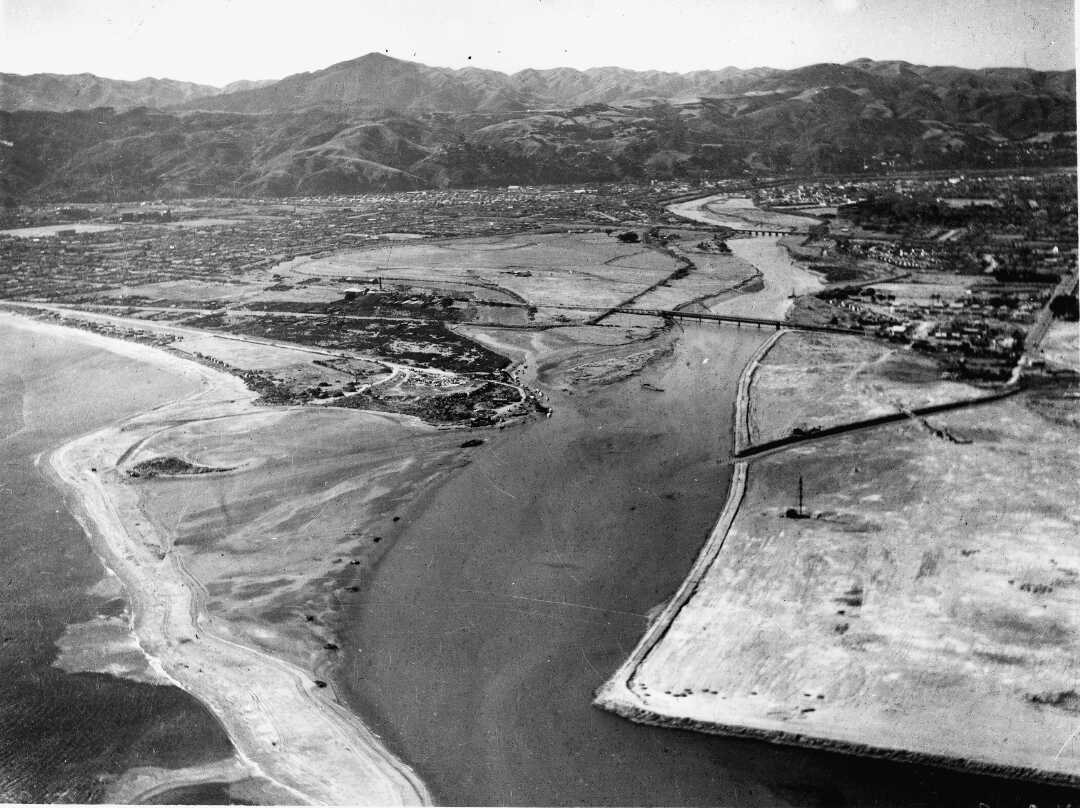 Figure 2 Aerial view of the Hutt River mouth. Evening post (Newspaper. 1865-2002): Photographic negatives and prints of the Evening Post newspaper. Ref: 1/2-122247-F. Alexander Turnbull Library, Wellington, New Zealand. natlib.govt.nz/records/23012987
By 1928 the landscape had changed dramatically. The last remaining piece of Māori-owned land near Ōwhiti Urupā, on the site of Waiwhetū Pā, was taken by the Hutt River Board under the Public Works Act for river protection works.
This land was never used for that purpose and was instead developed into an industrial area that now forms a large part of the modern-day suburb of Seaview.
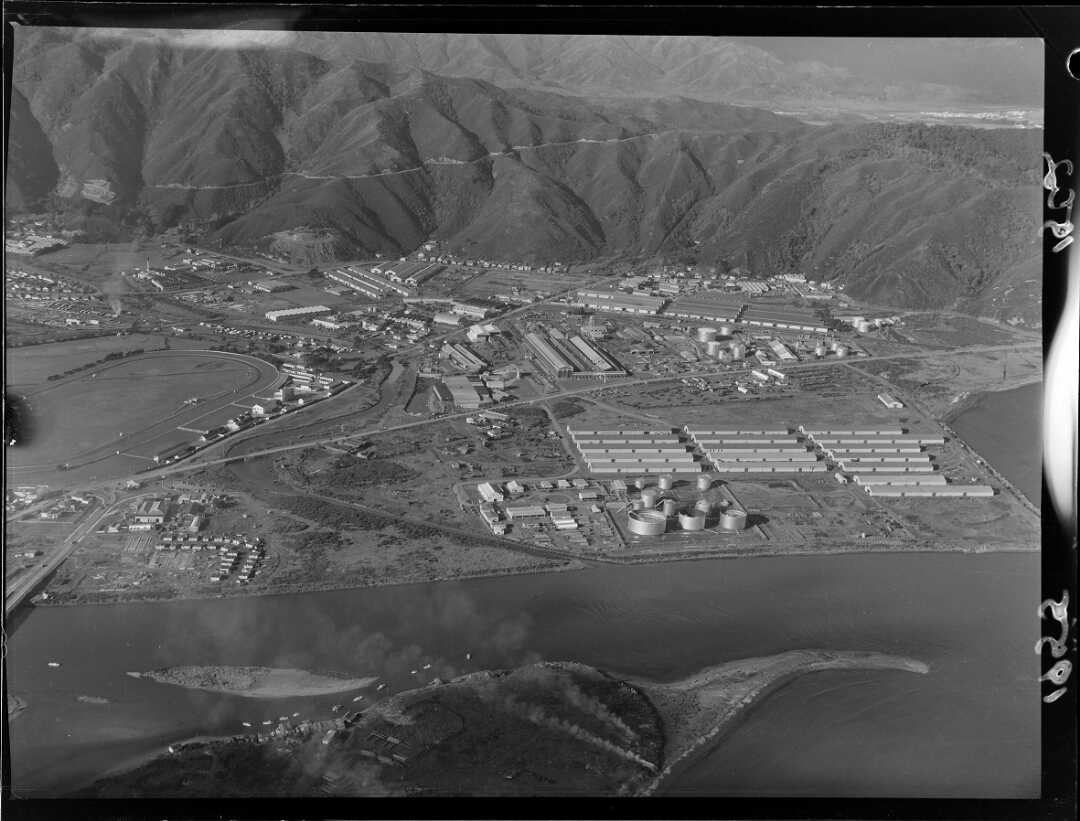 Seaview and mouth of Hutt River, from the air, with Wainuiomata Hill Road. Evening post (Newspaper. 1865-2002): Photographic negatives and prints of the Evening Post newspaper. Ref: EP/1955/1502-F. Alexander Turnbull Library, Wellington, New Zealand. natlib.govt.nz/records/22465993
This transformation came at a significant cost. Reclamations covered important food sources, altered stream mouths and alienated Mana Whenua from this important coastal area.
For the next 60 years industrial development around the estuary caused widespread environmental harm. Industrial waste and raw sewage were discharged into the Waiwhetū Stream and the estuary. This had a devastating effect on the waterways and the wider environment. Kai moana (seafood) and mātaitai (shellfish) became unsafe to eat. Traditional mahinga kai practices were interrupted or ceased altogether.
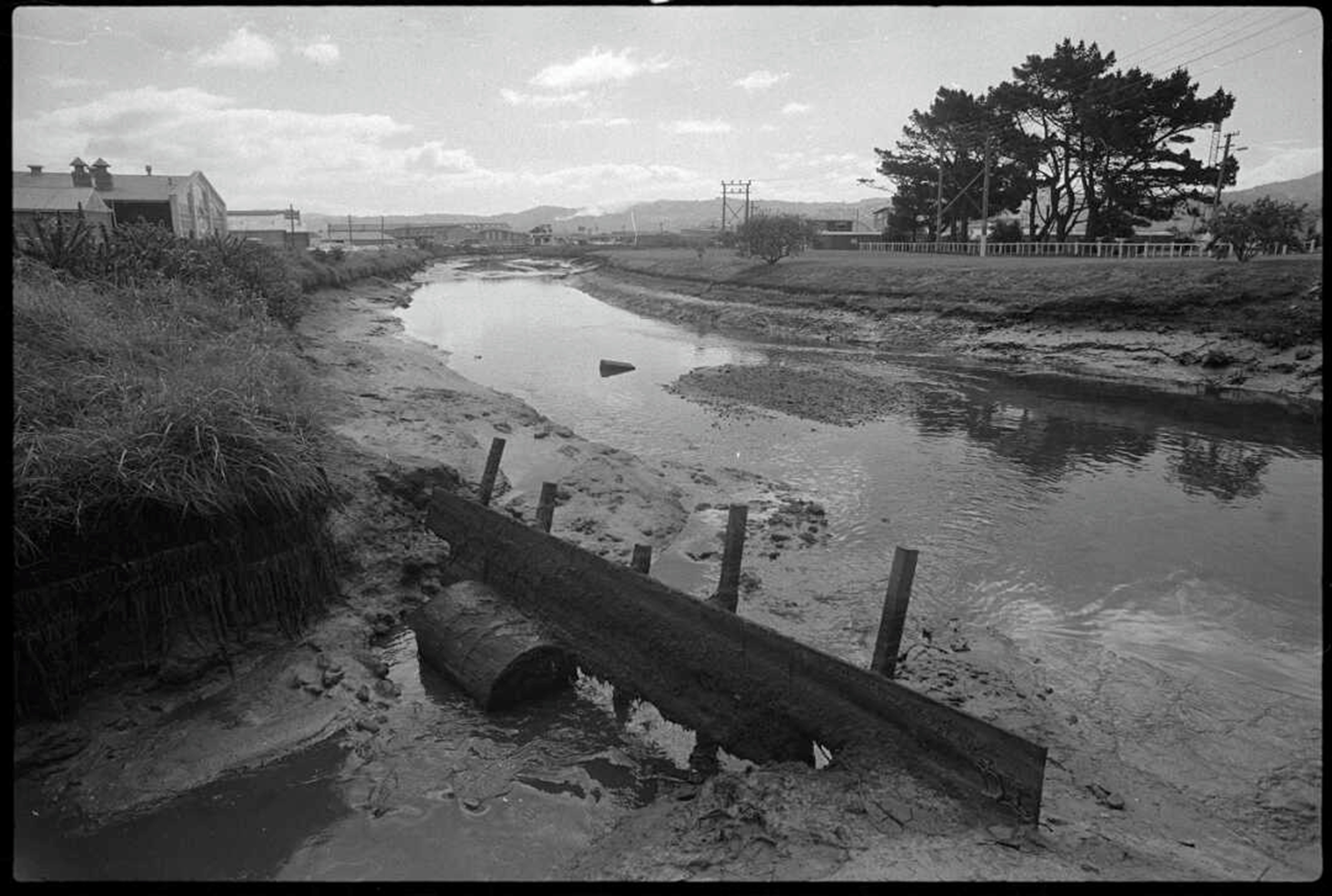 Waiwhetu Stream, Lower Hutt, polluted by industrial waste. Dominion Post (Newspaper): Photographic negatives and prints of the Evening Post and Dominion newspapers. Ref: EP/1975/4298/22a-F. Alexander Turnbull Library, Wellington, New Zealand. natlib.govt.nz/records/23026270
The degradation of these rich ecosystems was not only an environmental loss, but also a cultural one – disconnecting Mana Whenua from places that had sustained them for generations.
However, in the last 30 years cleanup initiatives in the Waiwhetū Stream and the estuary have significantly improved water quality, contributing to the return of fish and other aquatic life.
This revival has allowed communities to reconnect with the river and estuary, rekindling ancestral connection.