
Update on Head Start pathway
UPDATE 24 SEPTEMBER 2026
The Government has announced it will take more time before deciding which local government reform proposals submitted through its Head Start process will move to detailed design.
Eighteen proposals were submitted in August, including a region-wide proposal supported by Hutt City Council. The Government says further work is needed on representation, governance and how regional functions would be transferred and delivered.
The Government announcement says Cabinet is now expected to consider the proposals in early 2027.
Lower Hutt Mayor Ken Laban says the original timeframe was extremely challenging, and getting reform right matters more than moving quickly.
“Our communities deserve the time to shape what comes next. A pause is not a full stop. We heard clearly that change is needed, and we look forward to working with neighbouring councils and the Government on the next steps.”
Mayor Laban also acknowledged the Mana Whenua focus on long-term reform outcomes and thanked everyone who has shared their views so far. This feedback will continue to inform Hutt City Council’s approach.
The Government expects proposals endorsed by Cabinet to be developed in detail and considered for final approval in 2027. Any Head Start changes are intended to be in place before the 2028 local government elections.
We’ll update this page as decisions are made, and share opportunities for the community to have its say.
If you would like to receive updates on future opportunities to give feedback about amalgamation enter your details here.
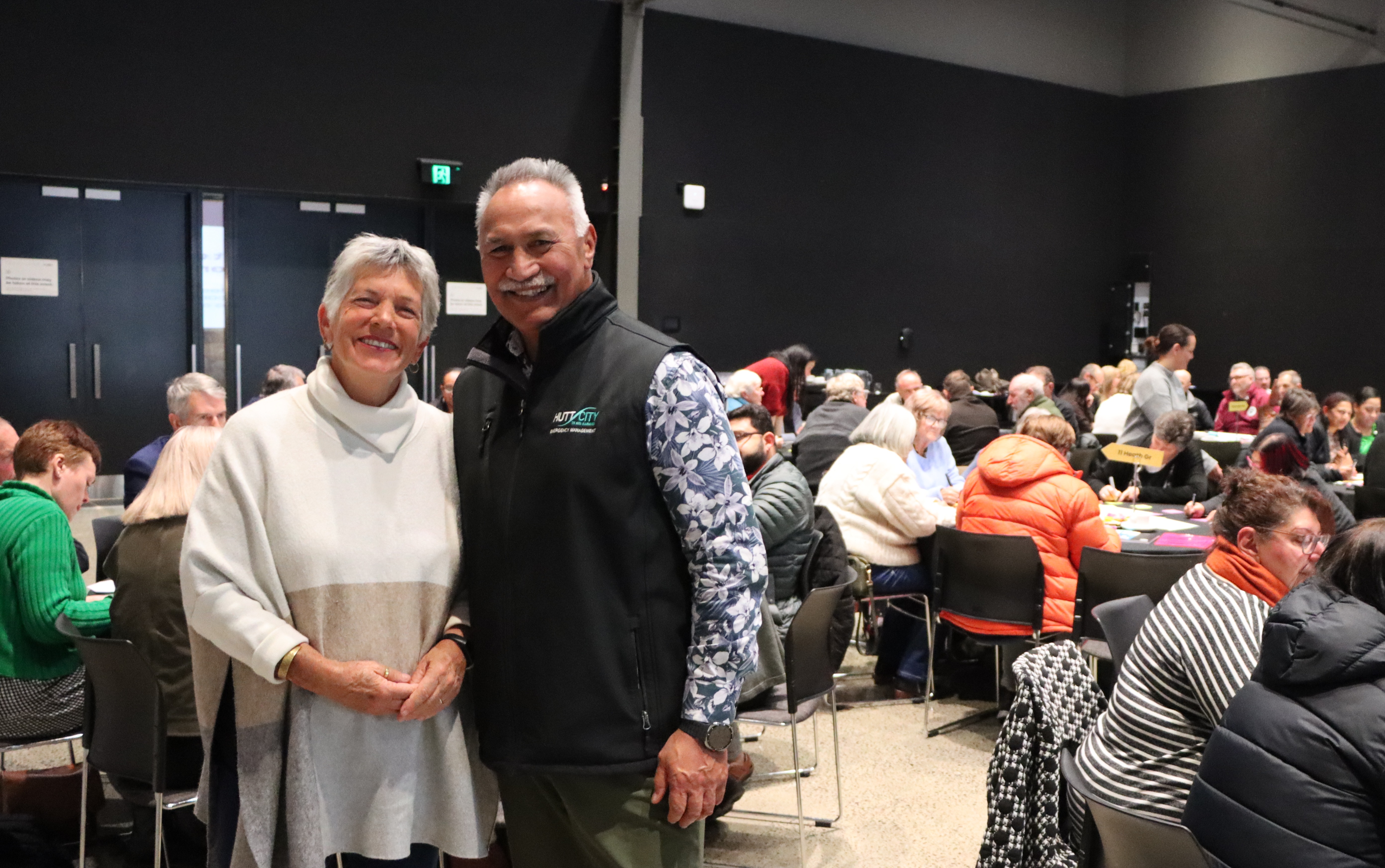
Lower Hutt Mayor Ken Laban with former Deputy Mayor of Auckland Penny Hulse, who shared insights from the Auckland amalgamation experience at the stakeholder forum on 1 July.
What's happened so far
Mayors from across the wider Wellington region have agreed to submit two proposals for consideration under the Government’s Head Start process.
Two proposals have been put forward by Councils in the region:
a region-wide unitary proposal supported by Wellington City Council, Hutt City Council, Porirua City Council and South Wairarapa District Council.
a Wairarapa proposal supported by Carterton District Council and Masterton District Council.
These proposals reflect the positions of the individual councils involved. Kāpiti Coast District Council and Upper Hutt City Council have not agreed to be part of this proposal, and on their behalf the submitting Councils have conveyed their request for some form of offramp from the Head Start pathway.
The region is already working together on many shared challenges and remains committed to regional collaboration, regardless of the outcome of the Head Start process. Discussions between councils have been constructive, while recognising that not every council has reached the same position.
Mana Whenua partnership at all levels, and Māori representation, remain fundamental to the process. Councils are committed to their continued involvement now and in any future arrangements.
Lower Hutt Mayor Ken Laban has released a discussion document informed by recent stakeholder and community feedback to help guide the Wellington region’s Head Start conversations.
The document is not a formal Head Start proposal, it’s a contribution to the regional design process and a reference point for Hutt City Council’s elected members as they consider emerging options. It will help inform discussions with other Councils as they work towards a regional proposal, and could also influence Government thinking around its developing backstop process.
The discussion document seeks to respond to the feedback received to date by exploring practical design options and protections that would help give communities confidence in any future changes. These include maintaining local representation, protecting community decision-making, retaining local services and continuing to recognise and work with Mana Whenua.
The document was discussed by Hutt City Council’s elected members at a briefing this week and has been shared as part of ongoing regional discussions under the Government’s voluntary Head Start process.
Around 150 Lower Hutt community representatives shared their views on the future of local government at a Mayoral Stakeholder Forum, which will help inform Hutt City Council's response to the Government's proposal to explore changes to local government.
Representatives from Mana Whenua, sporting and cultural groups, residents’ associations, advocacy and support organisations and business groups discussed what matters most to their communities and how local government can best serve future generations.
We received feedback from 418 people in the June survey, with a strong majority (84%) supporting the Head Start pathway approach of working with other councils to help shape the region’s future, rather than waiting for the Government to decide what happens next.
The dominant themes are rates and affordability, protecting local representation and decision-making, infrastructure investment, and concerns about Lower Hutt ratepayers inheriting costs from other councils. Across the board, there is a strong call for robust evidence, transparent financial modelling, and clear service delivery benefits before any decisions are made.
Overall, the feedback suggests residents are focused less on governance structures and more on practical outcomes, accountability, and ensuring Lower Hutt's interests are protected.
Participating councils established a Cross-Council Community Reference Group to provide ongoing community insight as ideas for local government reform were explored.
The reference group complemented broader community engagement by enabling councils to explore issues in more depth over three rounds of conversations with residents from across the Wellington region. This helped test emerging ideas, understand community priorities and concerns, and see how views evolved as more information was shared.
The work has now been completed ahead of councils considering whether to put forward a regional proposal under the Head Start process.
What we heard
Across all three rounds of engagement, consistent themes emerged:
- Affordability, rates and financial accountability were the strongest priorities.
- People wanted clear evidence that any changes would improve services and deliver better value for money.
- Many supported delivering major infrastructure and other region-wide services at a regional level, while retaining strong local decision-making for community facilities and place-based services.
- Protecting local representation and ensuring smaller communities continue to have a meaningful voice was consistently important.
- Participants wanted clearer, more practical information about costs, governance, and how any future arrangements would work.
- Many emphasised the importance of transparent decision-making, genuine engagement, and keeping communities informed throughout any change process.
The findings from the Community Reference Group have been considered alongside other engagement and technical work to help inform discussions on a potential regional proposal.
View the final Community Reference report here, including the individual engagement findings.
How the reference group worked
Approximately 100 residents were independently recruited from across participating councils (Hutt City Council, Greater Wellington Regional Council, Porirua City Council, Upper Hutt City Council, Horowhenua District Council, Masterton District Council and Carterton District Council).
Participants were selected to broadly reflect the diversity of communities across the region, with numbers allocated broadly in line with population while ensuring smaller communities were represented. Participants were recruited by an independent third-party research company. Personal details were not shared with councils, and feedback was anonymous.
Engagement was conducted through Qualifyr, an online qualitative research platform, enabling councils to gather detailed community insights and test ideas over multiple rounds as discussions evolved.
Insights gathered through the reference group will sit alongside local engagement, technical advice, financial analysis and other evidence used to inform discussions and decision-making.
The Cross-Council Community Reference Group was established to inform participating councils. Wellington City Council, Kāpiti District Council and South Wairarapa District Council are undertaking separate engagement activities, and findings from the reference group should not be considered representative of those council areas.
Video description: Starting the conversation about local government amalgamation
More information about the Head Start process
The Government invited councils across New Zealand to explore potential local government amalgamations through a fast-tracked “Head Start” process that closed for proposals on 9 August.
This process gave Councils a limited window to work together to explore options, test ideas and put forward regional proposals that reflect the needs of local communities. If Councils do not lead this work themselves, the Government says it will step in and make the decisions.
Councils across the wider Wellington region, Wairarapa, Kāpiti and Horowhenua - including Hutt City Council - participated in this Head Start process to ensure our communities have a voice in shaping any future proposals.
The work is being led through the Wellington Mayoral Forum, made up of Mayors from across the Wellington region, Wairarapa, Kāpiti and Horowhenua.
The Forum is exploring whether changes to local government structures could help Councils better meet future challenges and deliver improved outcomes for communities.
Mayor Andrew Little chairs the forum, with Mayor Fran Wilde serving as Deputy Chair. Mayor Ken Laban is representing the interests of Te Awa Kairangi ki Tai Lower Hutt.
The wider programme is being supported by a regional working group made up of Council chief executives and senior staff from across the region. Independent advisory and technical support is also being used to help assess options, financial impacts and governance models.
We’ll keep you updated
We are committed to keeping residents, businesses, Mana Whenua, community groups and stakeholders informed every step of the way.
More information will be shared as it becomes available, including opportunities to provide feedback during the detailed design phase if the government progresses the proposal. If you would like to receive updates on future feeback opportunities, enter your details here.