
Published: 11 August 2026
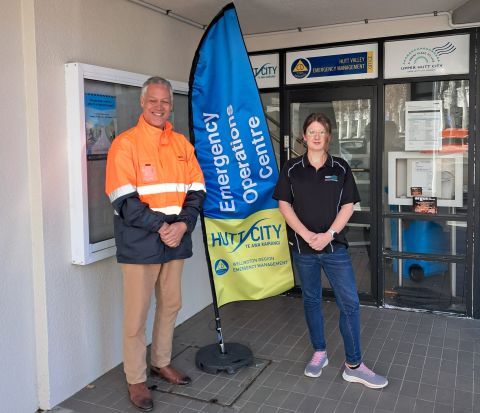
During this year's storms and severe weather, many of you asked great questions about emergency preparedness. We sat down with Hutt City Council's Emergency Management Lead, Anthony Robinson, and Emergency Management Advisor, Lauren Coe, to answer some of the most common ones.
The good news? Getting prepared doesn't have to be complicated. A few simple steps now can make a big difference when an emergency happens.
Three things you can do today
✔ Make a household emergency plan
Know how you'll contact each other, where you'll meet, and what you'll do if you need to leave quickly.
✔ Pack a grab bag
Keep essential items ready so you can leave safely if you need to.
✔ Get to know your neighbours
In a major emergency, your neighbours may be the first people who can help, and you may be able to help them too.
So, grab a cuppa and spend a few minutes reading a few words from Anthony and Lauren, where they share practical advice and answer some of the most common questions from our community.
What are some ways that our community can get prepared before an emergency event happens?
Anthony: “The first thing is recognising that emergencies can happen here, sometimes with little warning, so it makes sense to be prepared. In our region we need to be prepared for things like earthquakes, storms, flooding, landslides and tsunami.
Being ready is about being realistic. In a major emergency, there isn’t an emergency response team waiting in the wings that can get to every street and every household straight away. Emergency services, councils, utilities and other agencies will respond, but they will need to focus on the most urgent life-safety needs first.”
Lauren: “It's also important to be ready wherever you are, at home, at work or out and about.
A good place to start is with a household plan. Know where you would meet, how you would contact each other, who might need extra help, and where you could go if you had to leave quickly.
Then think about what you would need if power, water, internet, eftpos or roads were unavailable. Have emergency supplies at home, know your neighbours, and have a grab bag ready in case you need to leave in a hurry.
WREMO has a Home Ready guide that covers household plans, grab bags, emergency supplies, emergency water and getting to know neighbours. Store as much emergency water as you can and build it up over time. WREMO recommends enough for seven days.”
Anthony: “It also says emergency water should ideally last seven days. Check out their Website for all the details.”
What is a grab bag and what are some things that would be in one?
Lauren: “A grab bag is a small backpack of essential items you can take with you if you need to leave your home, work or school quickly.
It should be easy to carry and have the essentials you'll need for the first few hours. Things like water, snacks, walking shoes, cash, first aid items, hand sanitiser, medication, copies of important documents, a rain jacket, warm layer, torch, radio, phone charger, toiletries, baby supplies if needed, and pet supplies.
The key is to make it work for you. A grab bag for someone with young children, pets, medication or mobility needs will look different from someone else’s.
You can see some guidance on the WREMO website grab bags page.”
And remember, being prepared is not just about the stuff in your bag. It’s also about the people around you. Who would check on you? Who would you check on? Who on your street might need help?”
What does Council do to help prepare the city?
Lauren: “Council does a lot behind the scenes. For events we can see coming, like storms or heavy rain, we monitor forecasts, work with WREMO (Wellington Regional Emergency Management Office) and partner agencies, prepare public information, check in with key teams and contractors, and get ready to work together if the event gets worse.
Council coordinates and supports the response, but in a widespread emergency everyone has a role to play, households, neighbours, marae, community groups, iwi, emergency services, utilities and Council.
For events that may happen with little or no warning, such as a major earthquake, the preparation is different. It’s about having trained people, plans, systems, equipment, relationships and decision-making processes ready before they are needed.
If an event gets worse, Council may activate an Emergency Operations Centre. That brings together people focused on operations, welfare, public information, planning, logistics, safety, intelligence and coordination.”
What’s one last thing you want to share with the community?
Anthony: “The one message I’d really like people to hear is this: in a major emergency, official responders will be working, but they may not be able to reach everyone quickly or provide individual assistance straight away. As we’ve noted earlier, emergency services will be stretched and dealing with the most urgent issues first.
That means community resilience matters. Your first support might be your neighbour; your first source of information might be someone on your street. Continue checking official sources whenever communications are available. Your first practical support may come from neighbours, whānau or friends. If it is safe and open, your local Community Emergency Hub is a place to share information, ask for or offer help, and organise locally.
Get prepared, know your risks, make a plan, and get to know the people around you. Prepared households make stronger streets, and stronger streets make a more resilient community.”
Flooding
In this section, we’re talking to Lauren and Anthony about flooding, what flood-prone and low-lying areas mean, how to know your risk, and what to do before water starts rising.
What are flood-prone and low-lying areas?
Lauren: “Great question. Low-lying areas are places where water can naturally collect because of the shape of the land. That might include areas near rivers, streams, the coast, or places where stormwater can pond during heavy rain.
Flood-prone areas are places we know may be more likely to flood, based on history, flood modelling, local knowledge or hazard mapping.”
Anthony: “Flooding can happen in different ways. It can come from rivers, flash flooding, coastal water, or urban flooding when rain falls faster than the stormwater system can cope, or when drains become blocked.
The key thing to note is if water is rising around you, whatever the source or cause, the risk is real.”
How do you know if you are in a low-lying or flood-prone area?
Lauren: “A good first step is to check flood hazard maps and local information. You can check river flood risk through Greater Wellington’s flood hazard mapping, and keep an eye on WREMO, MetService and Council updates during weather events.
Maps and warnings are only part of the picture. You also need to pay attention to what is happening around you. Different maps cover different types of flooding, and the absence of mapped flooding does not mean there is no risk.
If water is rising, if access to your home is being cut off, if you feel unsafe, or if you think you may need to leave, act early. Don’t wait for an official warning or for someone to knock on your door.
Take your grab bag, take your pets with you when you evacuate, provided you can do so without delaying your departure or entering floodwater, and move to higher ground.”
If needed, where can people get sandbags from to help them prepare?
Anthony: “Sandbags may help divert limited shallow water if they are properly filled and placed before flooding begins, but they are not guaranteed protection and should never delay leaving. In many parts of Lower Hutt, flooding can happen quickly and across a wide area. Rather than relying on sandbags, focus on what makes the biggest difference: know your flood risk, have a plan, keep your grab bag ready, move valuables higher, clear drains if it's safe, and leave early if you feel unsafe.”
Does Council have sandbags?
Lauren: “Council does not operate a public sandbag supply as a standard preparedness measure.
In an emergency, Council focuses on understanding city-wide impacts, providing public information, supporting evacuation and welfare arrangements, coordinating Council services and contractors, and working with partner agencies.
Sandbags take time, people and equipment to fill, move and place properly. They can also create a false sense of security if people think they will stop floodwater. In many flood situations, especially where water is rising quickly or access could be cut off, the safer action is to move early, not wait and try to defend the property.
The key message is to protect people first. Property matters, but people, pets and whānau come first.”
What’s one last message you’d like to share?
Anthony: “Never underestimate floodwater. Conditions can change quickly, and small decisions can become big ones. Like driving through water, waiting too long to leave, or assuming someone else will tell you exactly what to do. In fact, never drive through floodwater!
Focus on impacts, not just forecasts. Ask yourself, what does this mean for me, my whānau, my pets, my street and my way out?
In a major event, emergency services may not be able to get to everyone immediately. So, act early, check on the people around you if it’s safe, and stay out of floodwater.”
Useful resources